
Originally reported November 16, 2026.
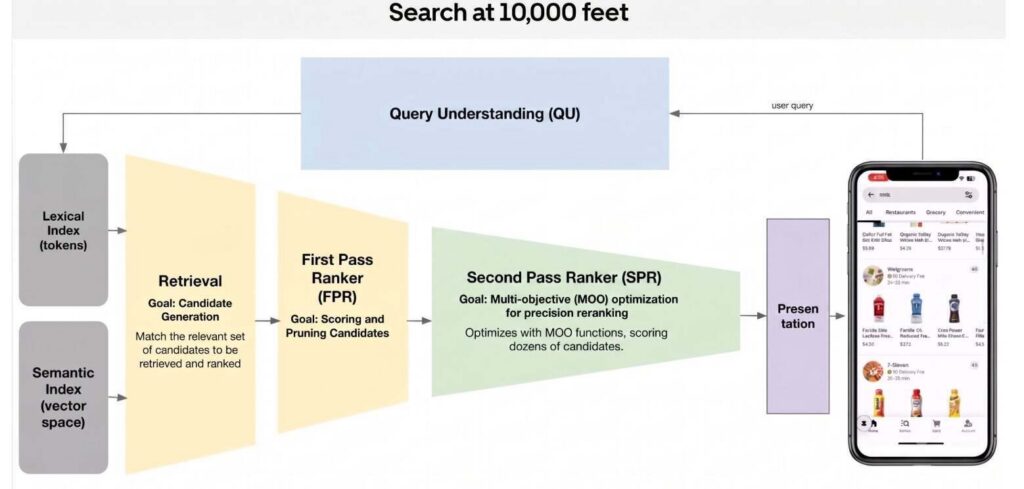
Uber reworked multiple stages of the Uber Eats search pipeline and reported a 50% reduction in end-to-end search latency, according to InfoQ. The changes span retrieval, feature hydration, ranking, ads, rendering and infrastructure—not one replacement architecture.
A key measurement change was to track above-the-fold completion: the time from a search request until the first screen of results, including images, has rendered. Server-side caching for pagination and asynchronous rendering of result items reduced that measure by more than 200 ms, Uber reported.
Uber also found that it was hydrating features for tens of thousands of candidates before ranking, even though many would be discarded. Removing low-value retrieval strategies saved about 120 ms; product-level embeddings cut data-query counts by more than 100-fold and saved another 50 ms. Separating ranking features from display data reduced latency by more than 100 ms. A redesigned ads path, using column-oriented bidding data, in-memory access and less serialization, saved about 130 ms. These figures describe individual changes and should not be added together as a single end-to-end result.
InfoQ says Uber introduced agentic coding workflows to identify, benchmark and validate further optimizations. Still under exploration, rather than deployed as part of the reported overhaul, are end-to-end microbatching, product-based retrieval, Zero Pass Ranking and HTTP multipart streaming. Uber reported that early tests of product-based retrieval reduced p99 latency by more than 50%; that test result is distinct from the reported overall end-to-end reduction.
Source: infoq.cn (originally published 2026-11-16 17:24 UTC+8)