

As reported on November 20, 2026, Google plans to begin a wider rollout of Android developer verification in January 2027. It will work with seven app distribution channels: Google Play, Samsung, Honor, OPPO, vivo, Xiaomi and Transsion. The rollout is gradual, not a simultaneous change to every Android device or region.
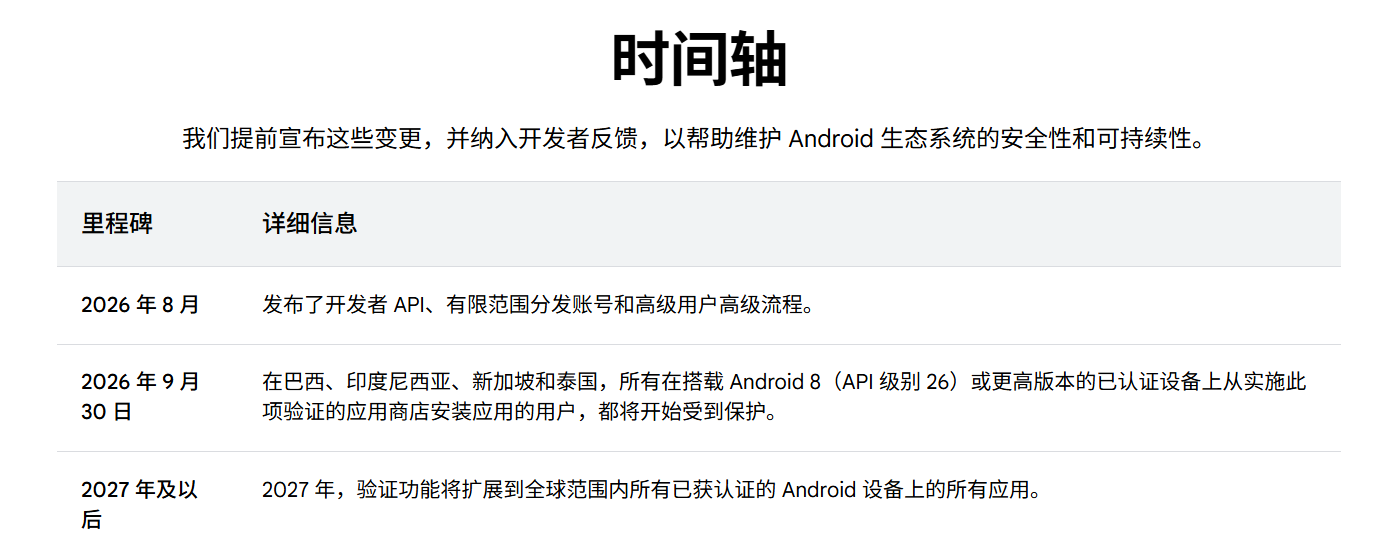
Under the policy, developers must verify their identity and register their apps for distribution on certified Android devices. Google first announced the requirement in August 2025, saying it was intended to make it harder for anonymous developers to repeatedly distribute malware. The requirement drew opposition from developers and users concerned about restrictions on third-party APK installation and sideloading.

Google’s November 19 announcement said verification had already begun on September 30, 2026, at some participating app stores in Brazil, Indonesia, Singapore and Thailand. Google intends eventually to extend coverage to app installation sources on certified Android devices in all countries and regions.
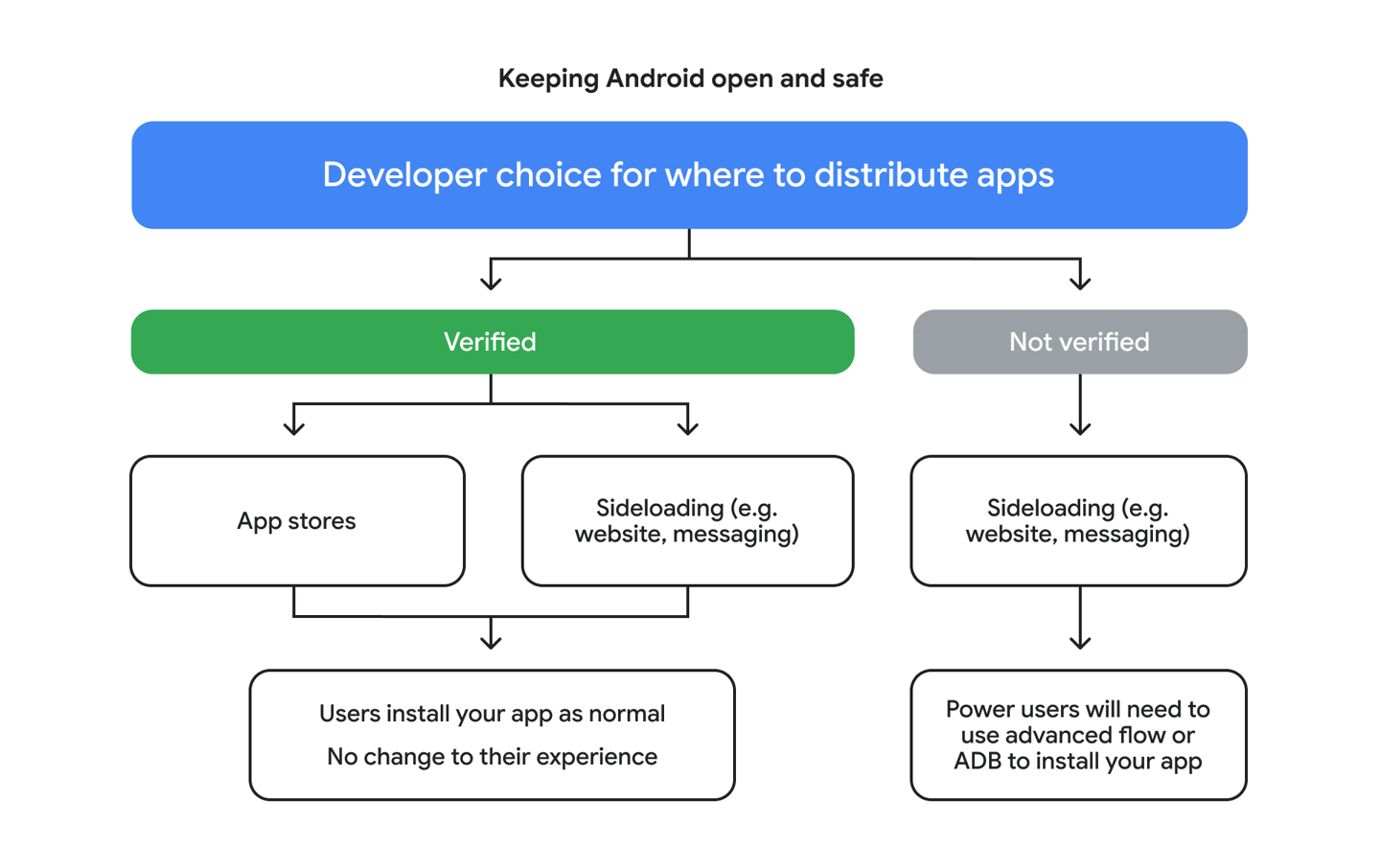
For developers, Google says it has offered verification to all developers since March 2026 and that millions of apps have been registered, accounting for more than 99% of Android app installs worldwide. Those figures are Google’s claims, not independent measurements.

Google has also adjusted the process. A limited-distribution account lets students and hobbyists share an app with up to 50 devices without a registration fee or government-issued ID; the limit rose from 20 devices in August 2026. An API is available to automate app registration in CI/CD workflows. For users who choose to install apps from unverified developers, Google says an advanced flow retains that option with additional risk checks. The verification rollout therefore does not mean every unverified app installation is categorically blocked.

Google recommends that developers verify their identity and register apps ahead of the wider rollout. It says registering an individual app takes less than 10 minutes.