
On October 20, 2026, FoxIO researcher Sébastien Féry disclosed Header Accordions, a memory-amplification issue in HTTP/3 implementations. QPACK lets a sender represent a header field with a short table reference. FoxIO found that some decoders allocate and copy the full field for each reference. On those implementations, an unauthenticated client could use a single connection to consume far more server memory than the size of its compressed headers would suggest.
FoxIO reported that seven of ten tested implementations were affected at the time of disclosure: quic-go (CVE-2025-64702), Wireshark (CVE-2025-13945), Cloudflare quiche (CVE-2026-12523), lsquic, aioquic/mitmproxy, Bun and Rust’s h3 library. The reported tests did not find the same issue in ngtcp2/nghttp3, Google quiche or IIS.
What the amplification figures measure
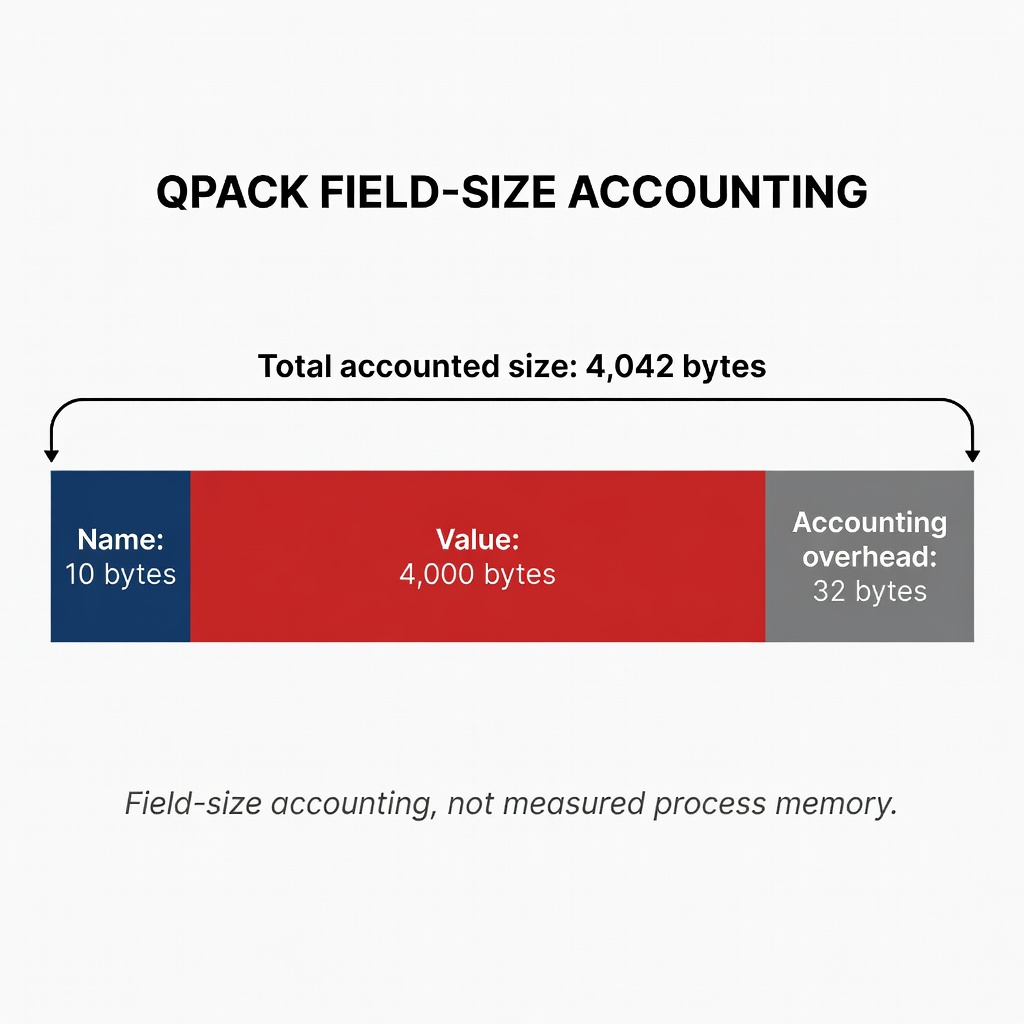
A November 26, 2026 analysis of aioquic 1.7.0 distinguishes three quantities: compressed bytes, decoded field-list size and process memory. In its worked example, a dynamic-table entry accounts for 4,042 bytes in total: a 10-byte name, a 4,000-byte value and 32 bytes of per-field accounting overhead. A one-byte reference to that entry gives a reference-to-entry comparison of 4,042:1.
For the complete HEADERS frame in the same example, the calculation is different: 8 bytes represent four fields with a combined accounted size of 4,166 bytes, a ratio of 520.8:1. That calculation excludes the earlier cost of inserting the dynamic entry. The analysis separately reports a 694-fold result at the decoder, but does not provide the underlying measurement totals. None of these ratios is a measurement of growth in the process’s resident memory.
Where to enforce the limit
FoxIO identified failures in both what implementations counted and when they checked it. The November analysis reports that quic-go v0.56.0 checked compressed frame length without checking the expanded field list. In aioquic 1.7.0, the author found a MAX_FIELD_SECTION_SIZE constant but no code that used it. That version also advertised a hard-coded 4,096-byte dynamic-table capacity with no configuration option for operators to change it.
A dynamic-table capacity limit governs stored entries, not the size of the field list reconstructed from them. Disabling the dynamic table also leaves static-table references available. The relevant decoder check is therefore cumulative: before allocating the next field, count its name, value and 32-byte overhead against the remaining field-list budget. A check performed only after the full list has been built can reject the request, but it comes too late to prevent the allocation.