
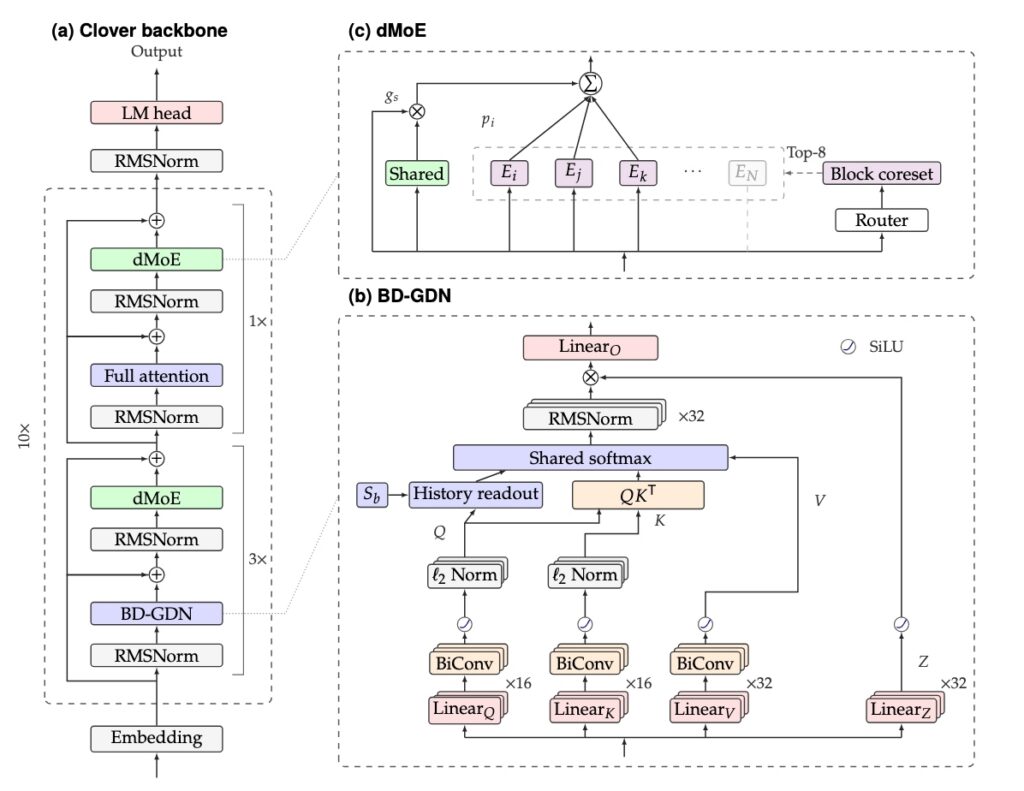
DiffuSpace’s Clover-35B-A3B-Preview is an attempt to make diffusion language models useful for agent programming and tool use, not just fast token generation. In reporting published on November 19, 2026, InfoQ said the team had released a technical report and opened its supervised fine-tuning (SFT) code. The model has 35 billion total parameters and roughly 3 billion active parameters.
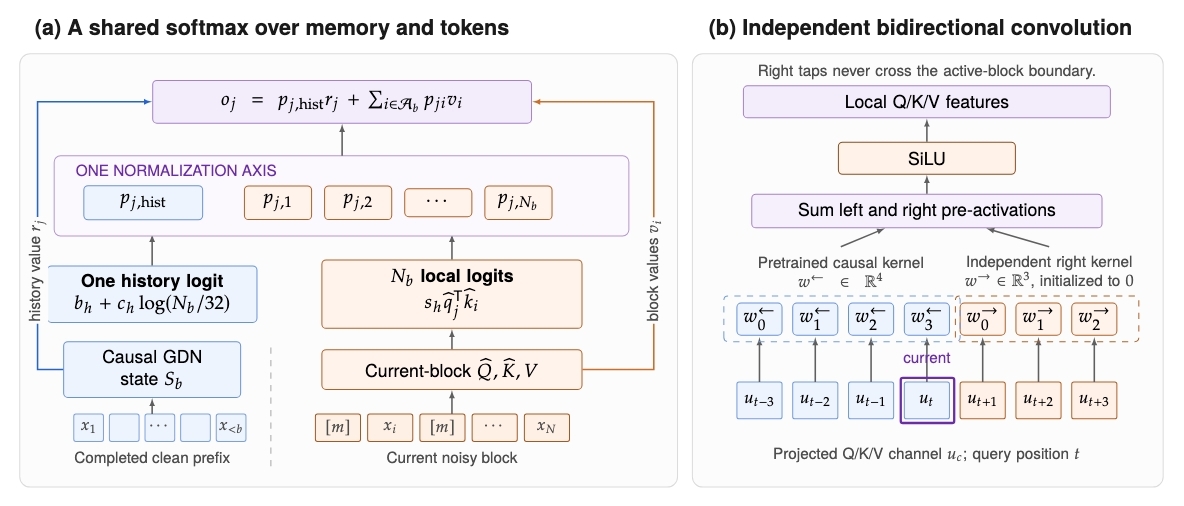
Unlike a conventional left-to-right model, Clover generates tokens in blocks and can revise tokens within the current block. Completed blocks can use a KV cache, reducing the need to recompute earlier context. Its modified Gated DeltaNet architecture, called BD-GDN, combines access to historical information with bidirectional interaction inside a block. That distinction matters: Clover does not yet plan or revise an entire long response bidirectionally. DiffuSpace co-founder and chief scientist Gong Shansan told InfoQ that full-sequence global planning remains a research goal.
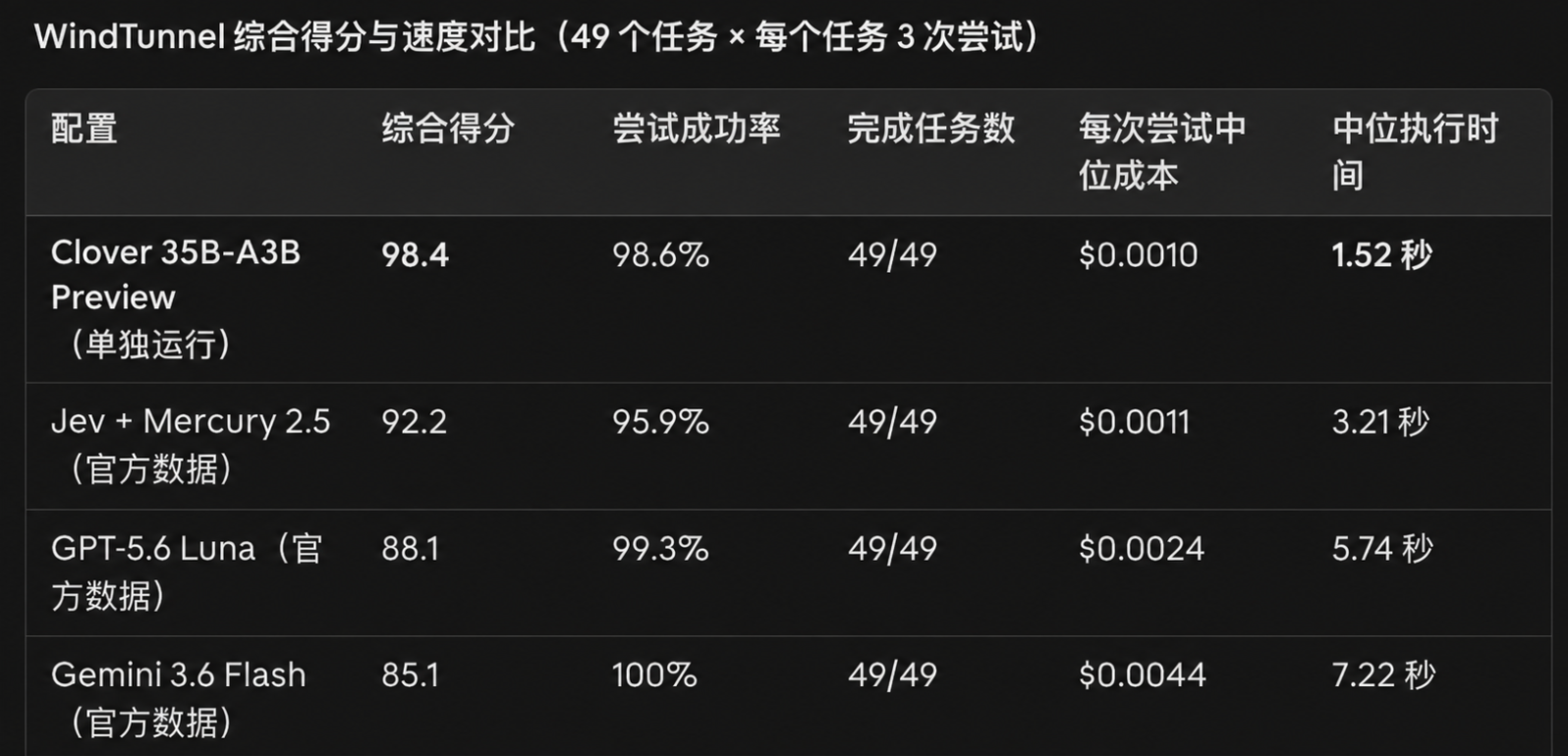
In DiffuSpace’s reported evaluations, Clover led the comparison models on seven agent metrics under a common evaluation protocol. Its reported scores included 73.6 on SWE-bench Verified, 51.7 on Terminal-Bench 2.1 and 65.3 on τ³ Overall. Under some test configurations, its token generation was reported to be 5–10 times as fast as comparable autoregressive models. These are reported benchmark results, not a guarantee that an agent will finish a job 5–10 times faster.
The distinction is practical: an agent may still need to call tools, wait for results, run tests and repair code. DiffuSpace used the same agent harness as its comparison models in public evaluations, while also developing a harness tailored to diffusion generation. Gong said the team had not yet conducted a rigorous, systematic comparison of end-to-end task time. Her estimate that model-speed gains could translate roughly one-for-one into task-efficiency gains was based on current usage experience, not that missing comparison.
The report also describes a local deployment test using an RTX 5070 Ti with 16 GB of VRAM, an AMD Ryzen 7 9700X and 64 GB of system memory. With GPU–CPU hybrid expert inference, INT4-quantized routed-expert weights and mostly BF16 non-expert modules, the reported MATH-500 decoding throughput reached 97.52 tokens/s in a top-8 verification configuration, with 97.6% manually checked accuracy. A top-6 configuration reached 106.25 tokens/s and 96.0% accuracy. Those figures describe specific hardware and settings, not general performance across devices.
Clover also has limitations: InfoQ reported weaker results on Humanity’s Last Exam and some traditional tasks relative to Qwen. For developers assessing it, the open weights, SFT code and support for SGLang and llama.cpp offer starting points for deployment work. The unresolved question is whether block-level generation and infrastructure designed around it can reliably reduce the time and cost of completed tasks, rather than only the time spent generating tokens.