
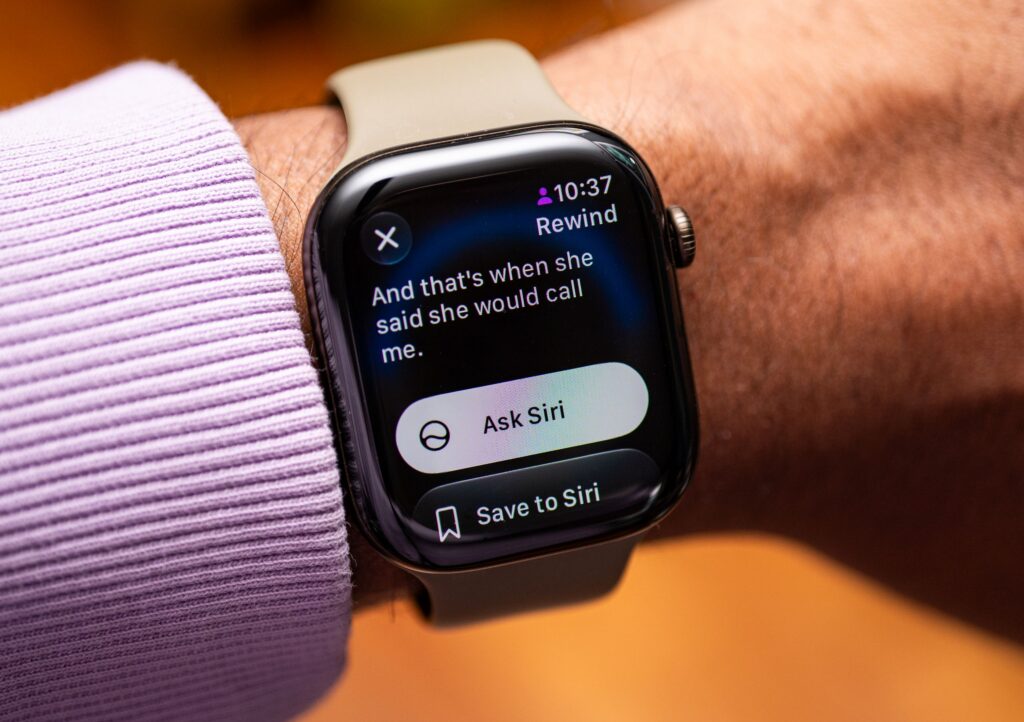
In a hands-on account published November 17, 2026, WIRED tested two Apple Watch Audio Intelligence features: Live Rewind, which transcribes the previous 15 seconds of conversation on request, and Siri Recap, which summarizes conversations captured during periods the wearer enables. Live Rewind was in the watchOS 27.3 public beta; an official launch was expected before the end of 2026.
The features are opt-in and limited to the Apple Watch Series 12 and Ultra 4 paired with an iPhone 16 or newer running iOS 27 and Apple Intelligence. They work only in English and are unavailable to users under 18. Siri Recap can run on a schedule, start at a specified location or be toggled from Control Center.

WIRED’s reviewer found that Live Rewind worked in moderately quiet settings but produced inaccurate transcripts amid background noise. Its 15-second window sometimes missed part of what he wanted to recall, and activating it during a conversation felt socially awkward. Recap proved more useful for retrieving a paraphrased detail from an interview, though its summaries were not detailed meeting notes. It also captured dialogue from videos the reviewer watched, creating recaps of conversations he had not participated in. With Recap enabled throughout the day, he reported no meaningful change to his usual charging pattern of roughly a day and a half; that is a personal observation, not a battery-life benchmark.

Apple says Live Rewind processes audio on the device, sounds a chime when activated and discards its text unless the wearer saves it. Apple says unsaved Recaps delete themselves after seven days, Private Cloud Compute does not store or log the data on its servers, and Recaps stored in the Siri app are end-to-end encrypted when synced with iCloud.
Those safeguards do not settle the question of bystander consent. Reem Suleiman of the digital-rights group Fight for the Future told WIRED that a wearer opting in does not obtain consent from everyone nearby. The practical trade-off is therefore not just transcript quality or convenience: it is whether people around the wearer know their words may be captured.