
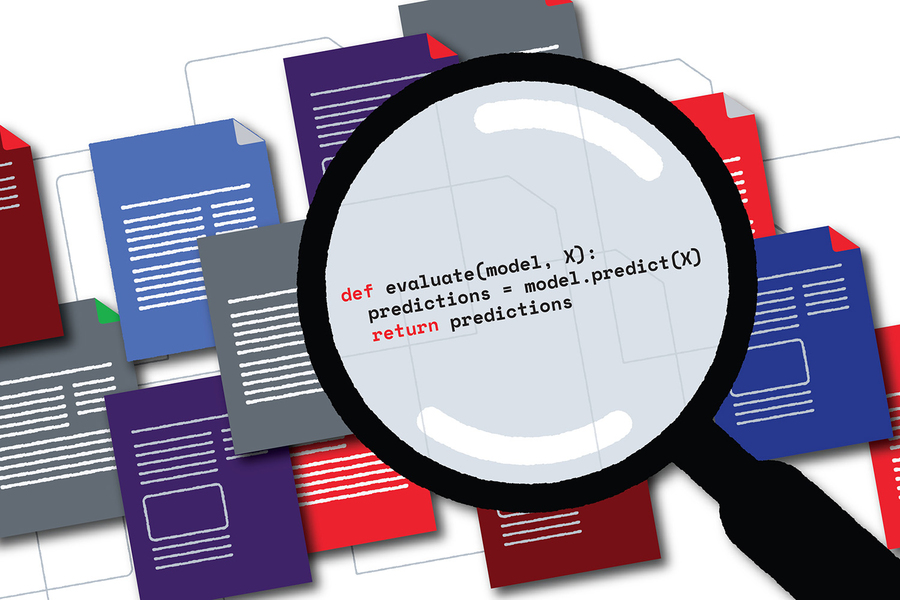
In a report published November 19, 2026, MIT described an international team’s review of how clinical prediction studies share the code behind their results. The team, led by researchers at MIT and Dana-Farber Cancer Institute, found that only about one in eight studies reported sharing code. Even when code was public, repositories did not consistently provide enough documentation and supporting information for others to understand or reuse it.
Clinical prediction studies develop or evaluate models that estimate patient outcomes, such as disease risk. Their code can reveal choices that are difficult to capture fully in a paper’s methods section, including how data was prepared and how model performance was evaluated.
The researchers examined almost 4,000 studies that cited the TRIPOD or TRIPOD+AI reporting guidelines and had full texts in PubMed Central’s open-access collection. They used a large language model to identify code-availability statements and extract links, then used software to retrieve linked repositories for assessment. The review considered documentation, software requirements and terms of reuse—not just whether a link existed.
Two researchers independently checked 500 papers and a separate sample of repositories to evaluate the automated work. Agreement was stronger on concrete features, such as the presence of a license file, than on judgments about whether documentation was adequate. The authors therefore emphasize broad patterns rather than treating every count as exact.
Among journals, the proportion of studies reporting shared code ranged from zero to more than 70%. Some journals with low sharing rates had written code-sharing policies. The review also identified practices that could help with reuse, including providing synthetic datasets when original patient records cannot be made public.
The findings, published in Nature Medicine, are informing TRIPOD-Code, a reporting guideline still under development. It aims to clarify which elements of shared analytical code researchers should provide; it is not an enacted requirement.