
Early DDR5 memory samples sometimes failed to work when first installed in a test system—and could prevent it from booting. Intel senior memory technology program manager Gabe Gelfand described this as a normal part of memory development in an episode of Intel’s Inside the Memory Stack published on November 17, 2026. The account was reported on November 21, 2026.
The problem is partly one of timing: memory makers need working processor platforms to test new DRAM, while Intel needs functional memory samples to validate those platforms. Gelfand said Intel works with Samsung, SK hynix, Micron and JEDEC on DDR and LPDDR development and validation for new client platforms.
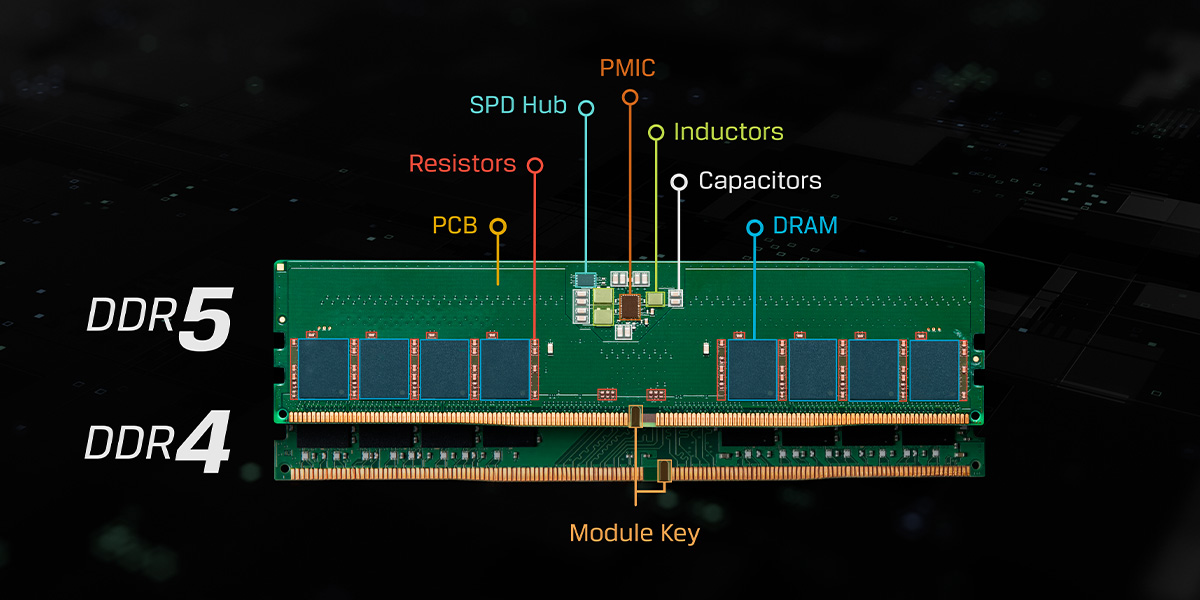
DDR5 adds components that must work together, including a power-management IC on the memory module, a serial presence detect (SPD) hub and a clock driver. Gelfand said DDR5 and LPDDR5 also operate at lower voltages and have tighter electrical margins than their predecessors. Samples from different batches of the same memory can behave differently, requiring repeated tests and joint debugging; in some cases, a memory maker must revise the DRAM chip and submit new samples.
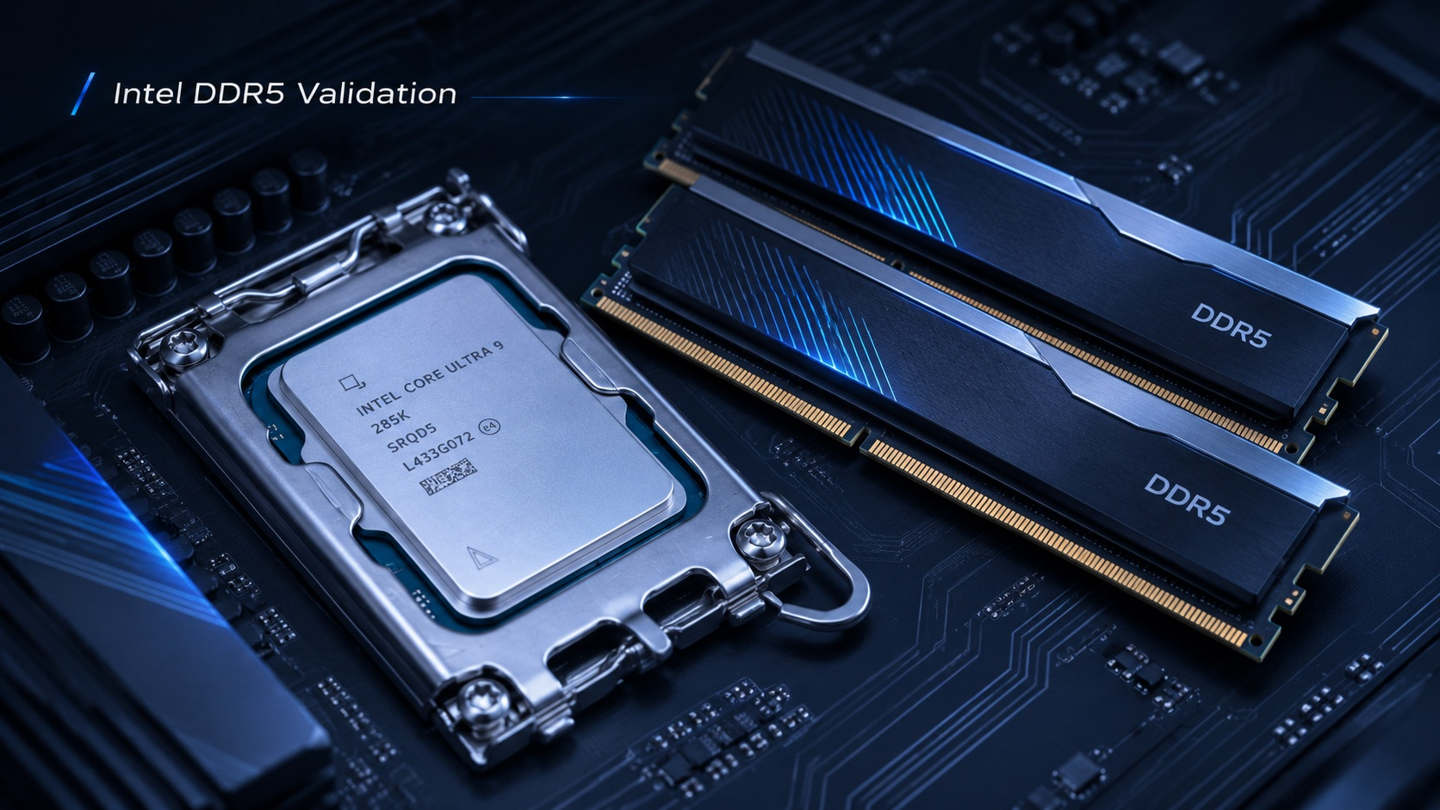
Intel used thousands of processors and many memory samples in testing, according to the report, and shared hardware, software and test methods with its partners. Soldered LPDDR presents an additional practical challenge: unlike a DIMM, it cannot simply be removed and replaced when a fault appears. Intel also refines its memory reference code so firmware can configure and calibrate memory during startup across different processors, samples and platforms.
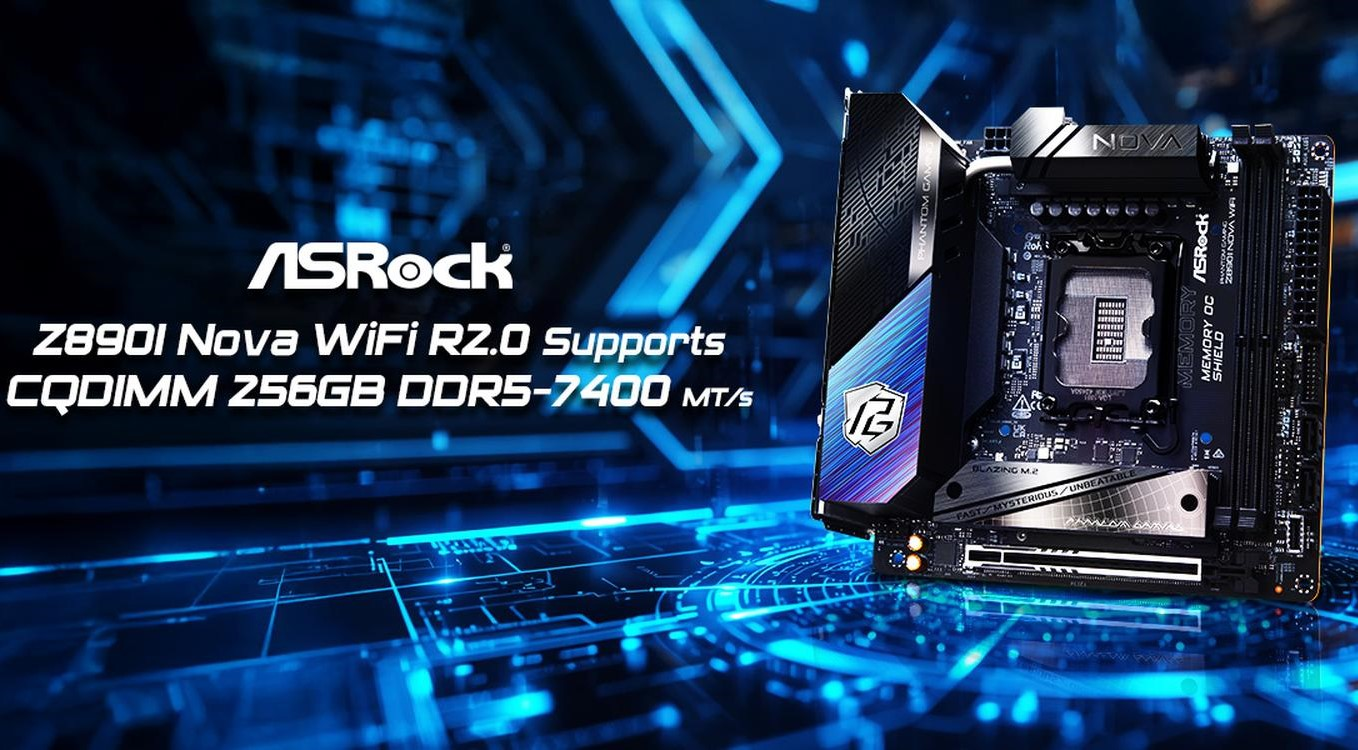
Capacity is another area of development. A four-rank CQDIMM can hold 128GB on one DDR5 module, making 256GB possible in theory with two modules on a dual-channel platform. In March 2026, ASRock reported running two 128GB Kingston modules at DDR5-7400 MT/s on its two-slot Z890I Nova WiFi R2.0 Mini-ITX motherboard. That reported configuration ran above the DDR5-7200 MT/s native data rate cited for the CQDIMM design; it should not be taken as a guarantee for other combinations of modules and boards.
The development and capacity examples point to the same engineering constraint: as memory speeds and capacities rise, the processor, DRAM chips, module, motherboard and startup firmware all need to be validated together.